Shared vs. Dedicated Hosting: Which is Right for You?
Learn the fundamental differences between Shared and Dedicated hosting to choose the best environment for your website's performance and budget.
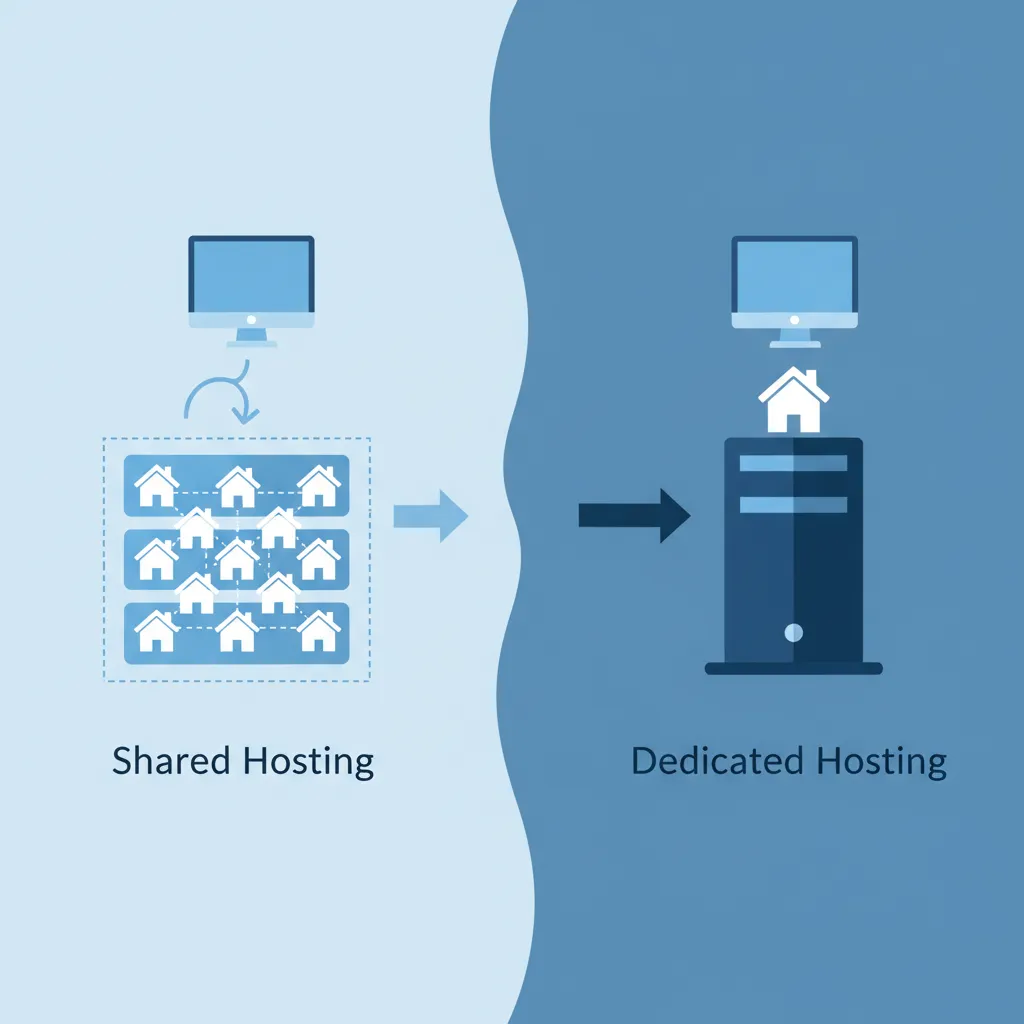
Choosing a web hosting plan is one of the most critical decisions you will make for your online presence. For most beginners and growing businesses, the choice often boils down to two primary categories: Shared Hosting and Dedicated Hosting.
Understanding the fundamental differences between these two environments is essential for ensuring your site remains fast, secure, and cost-effective.
What is Shared Hosting?
Shared hosting is the most common entry point for new websites. In this environment, a single physical server hosts hundreds or even thousands of different websites. All these sites share the server's collective resources, including the CPU (processing power), RAM (memory), and disk space.
The Pros:
- Affordability: Because the cost of maintaining the server is split among many users, it is the most budget-friendly option.
- User-Friendly: Most shared hosts provide a simplified control panel (like cPanel) and handle all server maintenance and security updates for you.
- Quick Setup: You can typically have a website live within minutes.
The Cons:
- Resource Competition: If another website on your shared server experiences a massive traffic spike, it can potentially slow down your site.
- Limited Customization: You cannot modify deep server-level settings or install custom software that might affect other users.
What is Dedicated Hosting?
Dedicated hosting is the polar opposite of shared hosting. When you lease a dedicated server, you are renting an entire physical machine exclusively for your website or application. You do not share resources with anyone else.
The Pros:
- Maximum Performance: You have 100% of the server’s power at your disposal, making it ideal for high-traffic sites.
- Total Control: Users generally have "root access," allowing them to configure the operating system, security protocols, and software stacks to their exact specifications.
- Enhanced Security: Since you are the only inhabitant of the server, the risk of "neighbor" interference or security breaches originating from another site is eliminated.
The Cons:
- Higher Cost: You bear the full cost of the hardware and connectivity.
- Technical Demand: Managing a dedicated server usually requires advanced technical knowledge or the additional expense of a "Managed Hosting" service.
Shared vs. Dedicated: Key Differences at a Glance
To help you decide, consider these three main factors:
- Traffic Volume: If you expect fewer than 10,000 visitors per month, shared hosting is usually sufficient. If you are running an enterprise-level e-commerce shop or a high-traffic media site, a dedicated server is often necessary.
- Security Requirements: While shared hosting is secure for general blogs, businesses handling sensitive financial or personal data often prefer the isolation of a dedicated environment.
- Technical Expertise: Are you comfortable managing a Linux server via a command line? If not, a shared plan or a managed dedicated plan is a better fit.
Conclusion
The "right" choice depends entirely on your current needs and future growth plans. Shared hosting is an excellent, low-risk way to get started, while dedicated hosting offers the power and flexibility required for scaling professional operations.
Before committing to a plan, it is wise to compare various hosting providers to see which features—such as automated backups, SSL certificates, and customer support—align with your goals.
Pricing and features mentioned are for illustrative purposes only. Always verify current details directly with the hosting provider.